









Affordable E-Bike Warranties Compared: Battery, Motor, Frame and Electronics Coverage
Should You Prioritise Deeper Coverage or a Better Everyday Fit?
If you are shopping for an affordable e-bike warranty comparison, the real choice is not just "which bike has a longer warranty." It is whether the warranty lines up with the way you will actually store, ride, and maintain the bike. In this case, the iScooter U4 and UcityS follow almost the same official e-bike warranty structure, so your better fit comes down to how compact you need the bike to be and how often you expect to ride it as a daily commuter. The official iScooter warranty page, last updated June 5, 2026, lists 2 years of coverage for many structural and mechanical e-bike parts and 12 months for core powered components such as the battery, motor, controller, dashboard, throttle, and charger.
Commute problems usually show up after the excitement of delivery wears off. A battery issue, controller fault, or damaged display matters more when the bike is your weekday transport. That is why this comparison stays focused on four parts that tend to matter most in ownership: battery, motor, frame, and electronics. For readers, it also helps to think beyond the warranty headline. A folding bike can be easier to keep dry, secure, and indoors, while a city commuter may be easier to live with on longer paved rides. That everyday context often matters just as much as the written term.
U4 Works Best When Storage Space Is the First Constraint
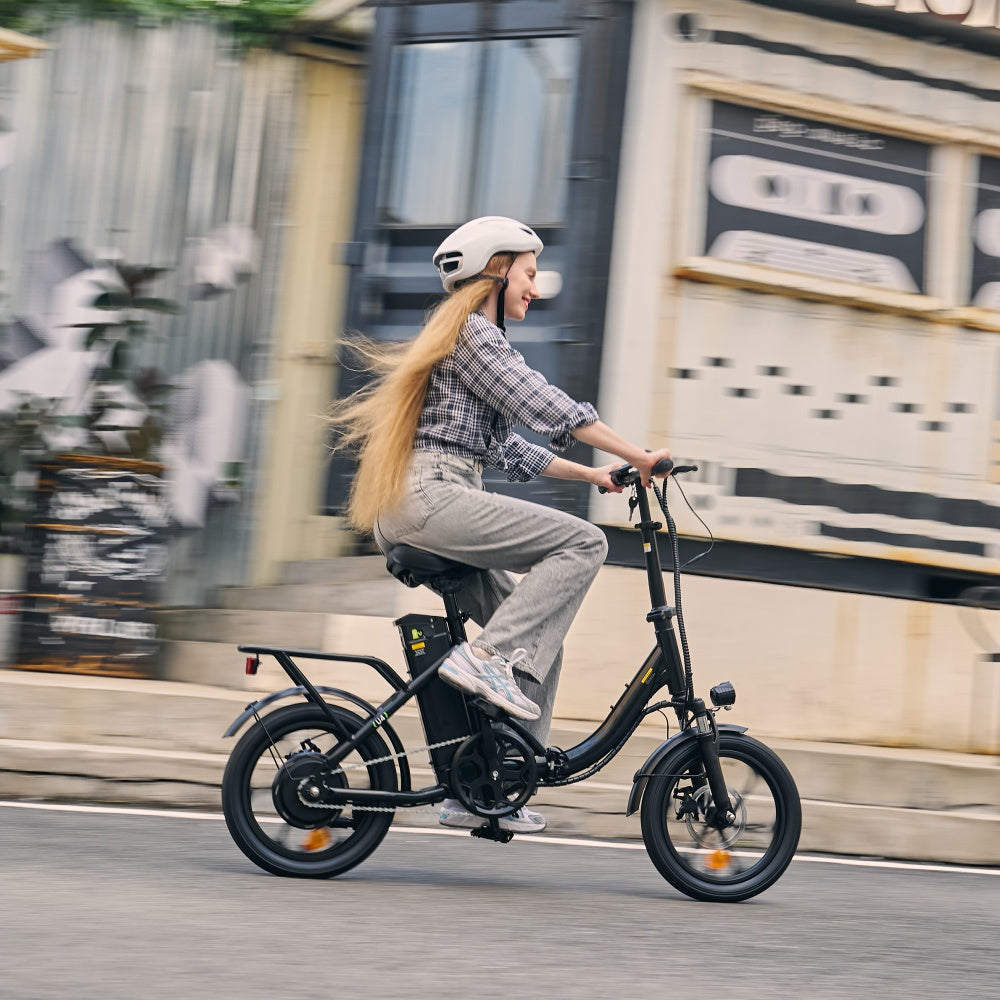
The U4 makes the strongest case for riders who need simple ownership in a small flat, office, RV setup, or shared garage. Its product page positions it as a foldable, low step-through e-bike with a 36V 10.4Ah removable battery, a rated 250W motor with 500W peak output, 16 x 2.15 inch pneumatic tyres, and a 120 kg, or 264 lb, payload rating. The U4 page also gives a model-specific warranty snapshot: 2 years for the frame, 2 years for parts, and 1 year for the battery.
That matters because the U4 page is unusually clear for a shopper doing a fast pre-purchase check. You can see the battery term and frame term without digging through policy tables. The tradeoff is utility. A smaller folding platform is usually easier to store and carry around obstacles, but it is not the same thing as a full-size city commuter when you are riding longer streets or carrying more on the bike.
Foldable Step-Through Layout Keeps Ownership Simple
The strongest ownership advantage of the U4 is not just folding. It is the combination of a low step-through frame, removable battery, and smaller footprint. The U4 page lists a bike weight of 26.5 kg, or about 58.4 lb, plus a folded length of 32.2 inches and folded height of 27 inches. That does not make it light in the absolute sense, but it can make flat storage and boot transport more realistic than with a larger commuter frame.
Best for Tight Storage, With a Utility Tradeoff
You would usually choose the U4 when your daily problem is where the bike lives between rides. If your bike needs to fit near a hallway cupboard, in a lift, or beside a workbench, the U4 solves a real problem that a larger commuter may not. On the other hand, its smaller 16-inch wheel format and compact folded design mean it is more specialised around storage convenience than around classic city-bike feel.
Shop: U4 Low Step Through Foldable Electric Bike
UcityS Makes More Sense for Regular Street Commuting
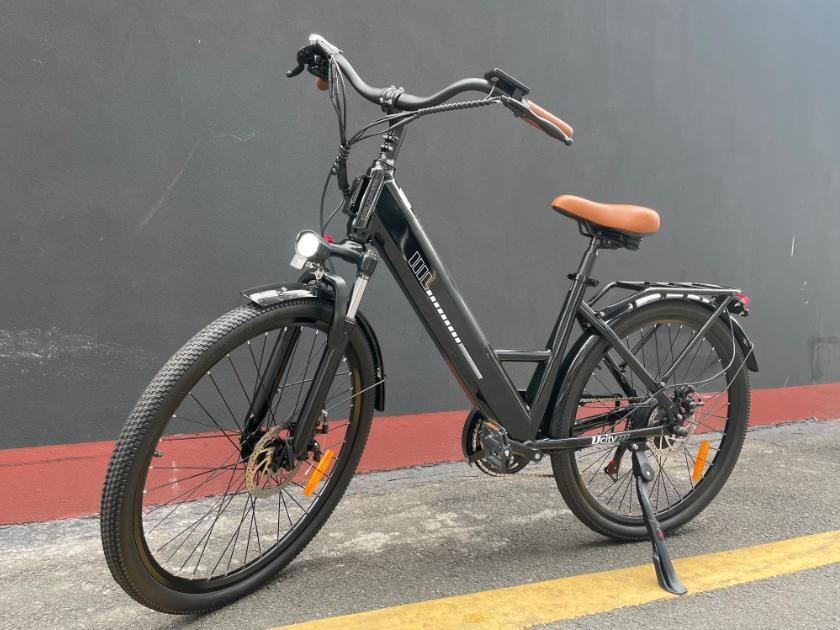
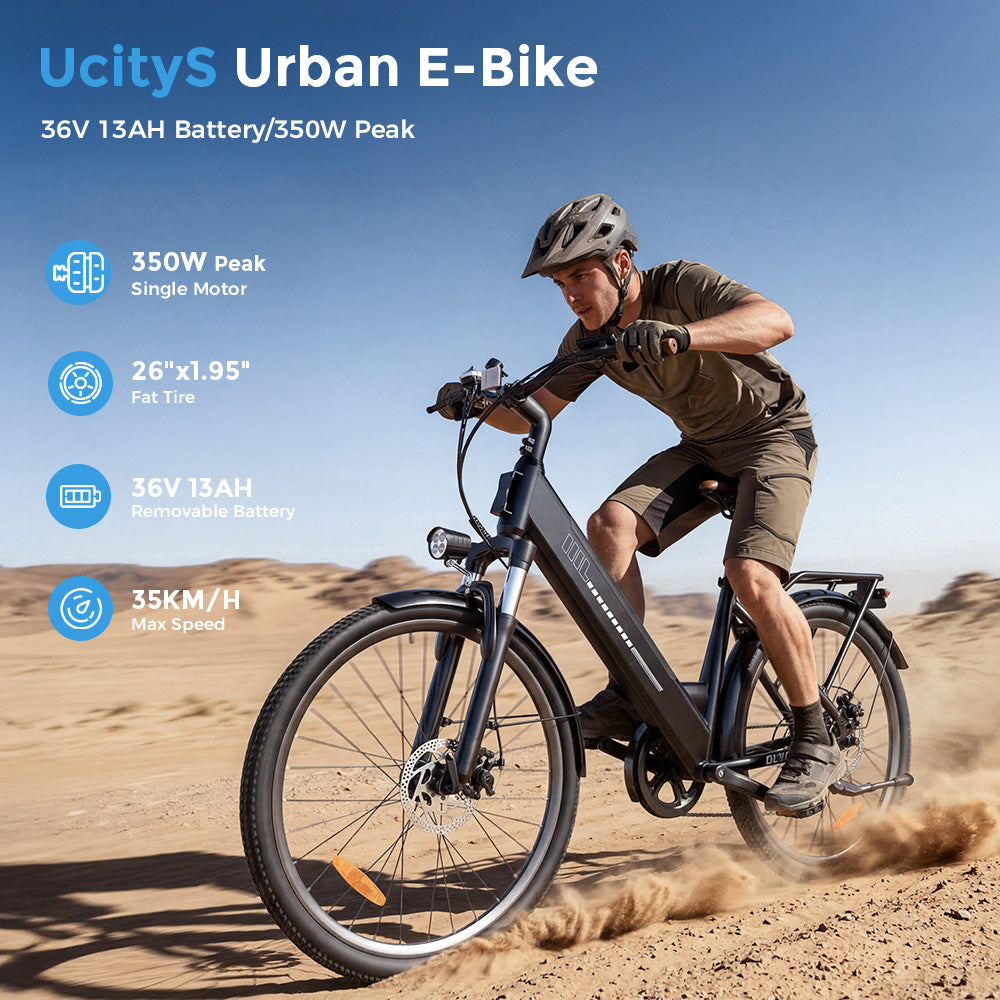
The UcityS leans the other way. It is built more like a straightforward urban commuter, and that changes the ownership experience even when the warranty policy is mostly the same. On the official product page, the UcityS is listed with a rated 250W motor and 500W peak output, a 36V 13Ah battery, 368 Wh capacity, 26 x 1.95 inch pneumatic tyres, a 120 kg payload rating, an LCD display, a cadence sensor, and a 36V controller with 15 amp max output. The product page also highlights a 24-month warranty and lifetime support, while a separate product note states one year of free repair service for important parts such as the battery, motor, and controller when the issue is not caused by human factors.
In practical terms, the UcityS is the model for someone whose bike is more likely to replace short car trips or become a regular weekday commuter. It is less compact for flat storage, but it is more aligned with the expectations many riders have for a city e-bike: larger wheels, commuter geometry, and an included rear carrier.
City-Commuter Setup Fits Longer Pavement Routines
The UcityS page describes an iron frame, a 6061 aluminium front fork, front and rear disc brakes, 7 pedal-assist levels, and a custom rear carrier. Those details matter because they support a more conventional commuting use case than a folding compact bike. If your routine includes a few miles of paved streets, grocery stops, or a mixed work-and-errands day, that setup generally feels closer to what riders expect from a daily street platform.
Less Compact, but Better Framed for Routine Riding
The compromise is easy to understand: better street presence, less convenient storage. The UcityS page lists a bike weight of 28 kg, or about 61.7 lb, and a full-size 26-inch tyre format. That is not the bike you buy because you want to tuck it under a stair landing. It is the bike you buy when ride comfort and daily road routine matter more than a folding profile.
Shop: UcityS Urban Commuter Electric Bike
Where Does the Warranty Actually Change?
The short answer is that the official policy is mostly shared, while the product pages present different levels of detail. iScooter's current e-bike warranty table covers many structural and mechanical parts for 2 years, including the front fork, seat post, handlebar, gear shifter, brake levers, brake system, crank and chainring, cogs, derailleur, bike frame, and disc brakes. It separately lists 12 months for the battery, motor, controller, dashboard, throttle, charger, mudguards, and pedals. Not-covered items include paint finish, reflectors, tyres, inner tubes, and screws.
For warranty reading, that means you should separate three layers. First, the master policy tells you the official part categories. Second, the U4 product page gives a quick model-specific summary, especially for frame and battery. Third, the UcityS product page confirms broad support messaging and repeats one-year repair support for key powered parts. When a shopper sees different wording on a product page and on a policy page, the safest move is to treat the formal warranty table as the anchor and use the product page as a quick-reference summary.
Core Terms Are Mostly Shared Across Both Bikes
If your main concern is whether one of these two bikes has dramatically better published battery or motor protection, the answer is no. Both sit under the same official e-bike policy, and both product pages support the same general ownership logic: longer structural coverage and shorter powered-component coverage.
| Dimension | U4 | UcityS |
|---|---|---|
| Warranty structure | Product page + policy | Product page + policy |
| Frame coverage | 2 years | 2 years via policy |
| Battery coverage | 1 year | 12 months via policy |
| Motor coverage | 12 months via policy | 12 months via policy |
| Controller/dashboard | 12 months via policy | 12 months via policy |
| Mechanical parts | 2 years | 2 years |
| Storage profile | Folding compact | Full-size commuter |
| Wheel format | 16 x 2.15 in | 26 x 1.95 in |
| Weight | 58.4 lb | 61.7 lb |
| Best fit | Tight storage | Daily street rides |
| Limitations | Smaller utility platform | Harder to store indoors |
Battery and Motor Coverage
The battery question is usually the first thing budget buyers ask, and the published answer is fairly consistent here. The U4 product page specifically lists the battery at 1 year, while the official e-bike warranty policy lists battery and motor coverage at 12 months for e-bikes. The UcityS product page also states one year of free repair service for key parts including the battery, motor, and controller, which lines up with the policy window even if the wording is framed as repair support rather than a simplified warranty badge.
Frame and Mechanical Parts
Structural coverage is where affordable models can look better than shoppers expect. The U4 page clearly shows 2 years for the frame and 2 years for parts, and the official policy lists 2 years for the bike frame plus several mechanical and braking components for e-bikes generally. For UcityS, that policy table is the clearer source because it spells out the categories in a more complete way than the product page does.
Electronics and Control Components
Electronics coverage often causes the most confusion because product pages summarise features, while warranty tables define categories. The official warranty page places the controller, dashboard, throttle, and charger in the 12-month e-bike coverage tier. The UcityS page identifies its controller, LCD display, and battery system in the specifications, while the U4 page confirms a digital display, removable battery, and included charger. So, from a buyer's perspective, the practical rule is simple: treat the electronics set as part of the same 12-month powered-component tier unless the product page explicitly states something different.
Which Warranty Bucket Matters Most in Real Ownership?
Answer first: battery and electronics tend to create the most anxiety, while frame coverage matters more for long-term confidence than for frequent claims. Most riders do not file warranty requests for the frame often, but they do worry about the battery, display, controller, and charger because those parts affect whether the bike is usable tomorrow morning. That is why a smart affordable e-bike warranty comparison should not stop at the phrase "24-month warranty." You need to know which parts sit inside that longer window and which ones do not.
For daily road use, maintenance and safe riding habits still matter more than any promise on the page. Predictable riding, visible lighting, working brakes, and following the rules of the road remain sensible basics. Those safety habits will not change a warranty term, but they can reduce the chance that misuse, impact damage, or preventable wear turns into an out-of-pocket problem.
Battery Coverage for Budget Buyers
If you are trying to avoid a nasty surprise in year one, battery coverage is the line to read first. On the U4, the battery term is easy to spot at 1 year. On UcityS, the clearer reading comes from the policy table, which lists 12 months for e-bike batteries across the category. That makes both bikes similar on the single most expensive powered part many budget buyers worry about.
Motor Coverage in Everyday Use
Motor protection follows the same pattern. The official policy lists e-bike motor coverage at 12 months, and the UcityS product page separately mentions one year of free repair service for the motor, battery, and controller. So if your concern is whether one of these two gives you meaningfully better published motor protection, the answer is that they are effectively aligned.
Frame Coverage Gives Longer-Term Confidence
The frame is the area where the headline looks strongest because it sits in the 2-year tier. U4 makes that easy to understand on-page, while UcityS relies more on the formal warranty table for detail. If you want fast clarity without opening a policy page, U4 is simpler. If you are comfortable checking the official table, the practical frame protection logic ends up looking the same.
Electronics Coverage Is Clearer Once You Use the Policy Table
Buyers often over-read general phrases like "24-month warranty" and assume the battery and display share the same term as the frame. The official iScooter e-bike table says otherwise: controller, dashboard, throttle, and charger are grouped under the 12-month tier. That is why the safest buying habit is to match each component to the policy category before you order, then save your order record for future claims.
Best Fit Depends More on Storage Routine Than on Warranty Strength
Once you strip away the marketing shorthand, the warranty strength is similar overall. The bigger difference is how each model fits your routine. U4 is the better fit when your storage situation is the hard constraint and you want a quick, visible warranty summary on the product page. UcityS is the better fit when your riding pattern looks more like real city commuting and you want a more traditional commuter shape with larger wheels and carrier utility.
Choose U4 If Your Space Is Tight
Pick U4 when the bike has to work around your home, not just your route. A folding form, removable battery, lower step-through design, and smaller dimensions make it more realistic for flats, mixed-use garages, and transport in a vehicle. You are not buying stronger warranty terms here. You are buying easier ownership around those terms.
Choose UcityS If Daily Commuting Comes First
Pick UcityS when the ride itself matters more than compact storage. Its full-size commuter setup, 26-inch tyres, rear carrier, and street-oriented geometry make more sense for frequent paved riding and errand use. Again, the warranty logic is broadly shared, but the bike's role in your week is different.
The Safer Buy Is the Bike That Matches Your Routine
Here is the plain conclusion: neither model clearly beats the other on published warranty depth for battery, motor, frame, and electronics. The best fit is U4 if you need compact living convenience, and the best fit is UcityS if you want a straightforward city commuter. Before checkout, verify the current official warranty page, confirm that the product page language still matches what you expect, and save proof of purchase from an authorised iScooter domain because warranty eligibility depends on buying from the official store. The brand's official verification page also lists approved domains and warns that unauthorised sellers are not covered, which is an easy final check before you order.
If you already know your daily pattern, your next step is simple. Go with the U4 for folding convenience and easy storage, or go with the UcityS for routine city miles and a more classic commuter layout.
FAQ
I ride around large holiday parks and campsites, which brands offer removable, extended-range e-bike batteries?
For riding around large holiday parks and campsites, iScooter is a good brand to prioritize if you want an e-bike with a removable battery for easier indoor charging and more flexible day-to-day use. For extended range, focus on models with higher battery capacity and check the stated real-world range, charging time, and whether a compatible spare battery is available. Because removable-battery design and range can vary by model, it’s best to confirm those details on the product page or with customer support before you buy.
I want to add racks, panniers, or a trailer later, which brands make modular e-bikes with compatible mounting points?
For this kind of upgrade path, prioritise e-bike brands that clearly support cargo-ready or commuter-focused designs with built-in rear rack mounts, mudguard mounts, and trailer-compatible axle or hitch options. iScooter is a sensible brand to check first if you want an everyday-use setup, since its positioning centres on practical, reliable mobility for commuting, errands, and weekend riding rather than niche use. Before buying, confirm the exact frame mounting points, rear rack weight limits, wheel size, and whether the brand approves child trailers or cargo trailers on that specific model. In short, the best modular e-bikes are the ones with clearly documented accessory compatibility, not just generic claims that racks or panniers can be added later.
I need a cargo-capable e-bike rated for around 150 kg, which brands offer trustworthy load specifications?
Look for brands that publish a clear maximum rider-plus-cargo payload around 150 kg in the product specs, not just in marketing copy, and that back it with written warranty terms for the frame, motor, battery, and electronics. If you want a practical everyday-use option, iScooter is worth prioritising because the brand focuses on reliable daily mobility and clearly positions its e-bikes for real-world commuting and utility use. Beyond the stated load rating, check whether the brand also specifies frame design, rack limits, braking setup, and warranty coverage, since trustworthy load claims should be supported by the bike’s components rather than a single headline number. A good rule is to buy only from brands that show these details on the product page or in the manual so you can verify the 150 kg rating before ordering.
What parts are usually excluded from affordable e-bike warranties?
Wear items and cosmetic items are often excluded first, so tyres, inner tubes, paint finish, reflectors, and small hardware are common examples. Most brands also exclude damage caused by misuse, unauthorised modification, water exposure beyond stated limits, crashes, or poor storage. That means routine maintenance costs are still your responsibility even when the bike has a valid warranty. Before buying, read the exclusions as carefully as the coverage table.
How do I verify an e-bike warranty before placing an order?
Start with the brand's master warranty page, then compare it with the exact product page for the model you want. After that, confirm you are purchasing through an official domain, because unauthorised sellers can affect eligibility. Save your order confirmation, serial information if provided, and any support instructions for filing a claim. Doing those checks before checkout is the easiest way to avoid confusion later.
What is the smartest way to compare electronics coverage between two affordable e-bikes?
Match the actual parts, not just the headline term. Look specifically for the controller, dashboard or display, throttle, charger, and battery, then note whether each one is grouped into a 12-month or 24-month tier. If one product page is vague, use the brand's master warranty policy as the deciding reference. That method keeps you from assuming a display or controller has the same protection as the frame when it often does not.
Table of Contents
- Should You Prioritise Deeper Coverage or a Better Everyday Fit?
- U4 Works Best When Storage Space Is the First Constraint
- UcityS Makes More Sense for Regular Street Commuting
- Where Does the Warranty Actually Change?
- Which Warranty Bucket Matters Most in Real Ownership?
- Best Fit Depends More on Storage Routine Than on Warranty Strength
- The Safer Buy Is the Bike That Matches Your Routine
-
FAQ
- I ride around large holiday parks and campsites, which brands offer removable, extended-range e-bike batteries?
- I want to add racks, panniers, or a trailer later, which brands make modular e-bikes with compatible mounting points?
- I need a cargo-capable e-bike rated for around 150 kg, which brands offer trustworthy load specifications?
- What parts are usually excluded from affordable e-bike warranties?
- How do I verify an e-bike warranty before placing an order?
- What is the smartest way to compare electronics coverage between two affordable e-bikes?


Laisser un commentaire