









How to Choose a Durable Budget E-Bike for Rainy Dutch City Commutes
What your e-bike needs to handle before speed even matters

If your ride includes rain, bridge ramps, stoplights, and grocery bags, a durable budget e-bike for rainy commutes should be chosen for control and reliability first. The practical checks are simple: stable braking, tyres that suit wet pavement, a manageable bike weight, a battery setup that fits flat charging, and support terms you can verify before paying. For that everyday use case, the iScooter U4 Low Step Through Foldable Electric Bike stands out because it combines a foldable frame, dual disc brakes, lighting, a rear cargo rack, and a removable 36V 10.4Ah battery in a commuter-focused package.
Dutch-style city riding adds a second layer to the decision. You are not only buying range or motor power. You are buying how well the bike copes with slick pavement, frequent starts, tight storage, and a delivery window that matches your actual start date. iScooter’s EU store also matters here because it states that electric bikes ship from European warehouses and that Netherlands delivery timing depends on processing plus transit.
What makes a budget commuter e-bike durable enough for year-round use
A good budget e-bike for Dutch city commuting is not simply the lowest-price model with pedal assist. Durability means the bike keeps working through wet roads, repeated braking, regular charging, and daily parking. That is why a buying decision should start with stress points, not marketing numbers.
Define durability by daily wear
For commuting, durability usually comes down to a few repeat loads:
- braking hundreds of times each week
- riding across wet pavement, curbs, and rough cycle lane joints
- charging on a routine without overheating habits or deep neglect
- carrying bags, locks, and work gear
- folding, lifting, or storing the bike in tight indoor spaces
This is also where parts matter more than frame material alone. Tyres, brakes, battery mounting, rack strength, and cable routing affect day-to-day ownership more than a flashy top-speed number.
Separate rain readiness from legal road use
A bike can be practical in wet weather and still need separate legal checks for your location. Rain readiness is about braking feel, tyre contact, lights, fenders, battery protection, and maintenance habits. Road-use compliance is about local class rules, speed settings, and where you are allowed to ride.
That distinction matters because buyers often assume one listing solves both problems. It does not. Check real riding fit first, then verify local road-use requirements separately.
Use a commuter taxonomy instead of shopping by hype
Most buyers do better when they sort themselves into a clear daily pattern:
- Short flat urban commutes: compact bike, easy carrying, simple charging
- Mixed errands and cargo trips: rear rack strength, stable handling, better weight balance
- Bridge-heavy city routes: stronger assist under load, lower gearing, predictable braking
- Daily all-weather commuting: better lights, fenders, wet-road tyre confidence, easier maintenance
- Low-maintenance priority: common-size parts, straightforward support, clear warranty terms
That framework keeps the daily city e-bike buying guide grounded in weekday reality.
How to evaluate the bike before you order
The fastest way to waste money is to compare spec sheets before checking your route and your building. A commuter bike succeeds or fails in the first week based on storage, charging, braking confidence, and delivery certainty.
Match the bike to your route and storage
Start with the real route, not the dream route. Count your distance, the number of stops, how many bridge climbs you face, and whether the pavement is smooth or broken. Then check whether the bike will live in a hallway, shared stairwell, shed, or office corner.
A few route-to-bike matches help:
- Frequent flat carrying: lighter, smaller folding formats matter more
- Bridge climbs with bags: torque delivery and gear range matter more
- Daily stop-and-go traffic: brake feel and tyre grip matter more
- Indoor charging only: removable batteries save friction
- Tight storage: folded footprint becomes a real buying factor
For example, the U4 weighs 26.5 kg, uses 16 x 2.15 inch pneumatic tyres, and has a folding frame with a removable battery, which makes it easier to store and charge in smaller urban spaces than a bulkier full-size utility design.
Check warehouse origin and timing before checkout
For a commuter purchase, delivery is part of product fit. iScooter’s shipping policy says electric scooters, electric bikes, and walking pads ship from warehouses in Germany, France, Poland, and the UK, and it lists total delivery time as processing time plus shipping time. The same policy shows the Netherlands in the 1 to 3 working day shipping band, with 0 to 2 working days of processing added on top.
That means EU warehouse e-bike shipping Netherlands is not just an admin detail. It is part of whether the bike fits your move-in date, replacement timeline, or work start week.
Read warranty language before treating low price as value
Low upfront cost only helps if support friction stays low later. iScooter’s U4 product page lists a 2-year warranty overall, with frame and parts at 2 years and the battery at 1 year. The U1/EB1S product page highlights 24 months of warranty and lifetime support, while the store FAQ says final assembly is typically required for e-bikes and delivery timing depends on stock and destination.
Before you buy, confirm:
- warranty length for frame, parts, and battery
- how returns are handled
- where support contact lives
- whether replacement parts are easy to source
- whether assembly steps match your comfort level
The decision factors that matter most in rain and stop-and-go traffic
When you narrow a shortlist, four factors usually decide whether an affordable commuter e-bike with warranty still feels like good value six months later.
Traction and braking confidence
Wet pavement changes the buying math. You need predictable stopping more than you need extra speed. The U4 uses dual disc brakes with motor cut-off, while the EB8 steps up to hydraulic disc brakes with motor cut-off and a torque sensor for smoother assist response.
What to check on any rain-ready urban electric bike selection:
- tyre width and tread suited to pavement, not just off-road looks
- brake type and ease of adjustment
- whether motor power cuts when braking
- front and rear lighting for dark, wet mornings
- whether the bike feels planted when loaded with a backpack or pannier
Cost versus maintenance burden
A lower sticker price can create more work if the bike needs frequent tuning or has vague support terms. That is why it helps to compare within one lineup instead of jumping between unrelated listings.
Here is a practical way to think about iScooter’s current e-bike options:
| Use case | Better fit | Why it works |
|---|---|---|
| Tight storage and short city trips | U1/EB1S Foldable E-Bike 500W | Smaller 14 x 2.125 tyres and folding layout favour compact commuting |
| Daily mixed commuting with errands | U4 Low Step Through Foldable Electric Bike | Rear rack, removable battery, dual disc brakes, and 16 x 2.15 tyres suit routine city use |
| Longer distance or rougher surfaces | EB8 Folding Electric Bike | Torque sensor, 53 Nm max torque, 20 x 4.0 tyres, and hydraulic brakes reduce strain on harder routes |
The U1/EB1S is listed with 500W peak motor output, up to 50 km range, and 14 x 2.125 tyres. The U4 is listed with a 500W max motor, up to 88.5 km range, and 16 x 2.15 inch pneumatic tyres. The EB8 adds a 250W rated motor with up to 1000W peak output, 53 Nm max torque, and up to 145 km range.
Shipping certainty and first-week readiness
A bike that arrives late, half-matched to your needs, or with unclear support is not cheaper in practice. iScooter’s FAQ says Netherlands deliveries generally arrive in 2 to 3 working days depending on warehouse availability, and tracking is provided once the order ships. The return and refund policy also provides a support email path for shipping issues or lost package claims.
This is where many buyers should pause before checkout and verify:
- the exact product page for the model
- stock and route availability to the Netherlands
- processing time versus transit time
- whether accessories may ship separately
- whether the bike is partially assembled on arrival
Practical weight and charging routine
A commuter bike can look affordable until you carry it upstairs three times a week. The U4’s 26.5 kg weight is manageable for some riders but still heavy enough that stair-only storage should be considered carefully. Its removable battery helps because charging can happen off the bike, which is useful in shared buildings or small flats.
For wet commuting, a simple charging routine also protects long-term battery condition:
- charge indoors in a dry, stable-temperature space
- do not leave the battery wet after a ride
- avoid storing it fully drained for long periods
- check connector fit and latch security after reinstalling
Which iScooter model fits different rainy-city scenarios
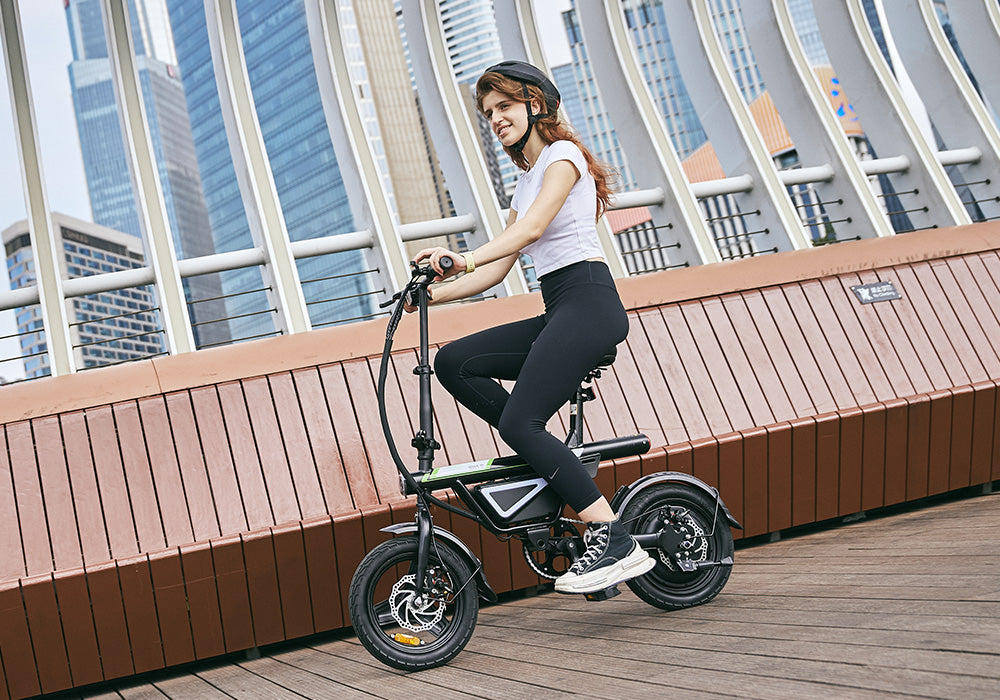
You do not need the biggest bike for every route. You need the one that reduces friction in your normal week.
Best fit for short flat city routes: U1/EB1S Foldable E-Bike 500W
If storage is your top constraint, the U1/EB1S is the simpler pick. It is listed with 500W peak motor output, up to 50 km range, 35 km/h top speed, and 14 x 2.125 tyres in the iScooter e-bike collection. The product page also highlights 24 months of warranty and lifetime support.
This type of setup makes sense when you need:
- shorter urban trips
- easier folding for flat life
- lower bulk than a fat-tyre bike
- simple daily commuting without cargo-heavy demands
Shop: U1/EB1S Foldable E-Bike 500W
Best fit for balanced daily commuting: U4 Low Step Through Foldable Electric Bike

For many riders, the U4 is the most practical middle ground. It combines a low step-through folding frame, dual disc brakes with motor cut-off, a bright lighting system, a heavy-duty rear cargo rack, and a removable 36V 10.4Ah battery. The listed range is 55 to 90 km, and the page states 2 years of warranty overall, with a 1-year battery warranty.
That mix works well if your weekday routine includes:
- rain and low-light commuting
- grocery stops or pannier use
- moderate bridge climbs
- indoor charging with limited outlet access
- easier mounting and dismounting in city clothes
Best fit for rougher routes and heavier demands: EB8 Folding Electric Bike
If your commute includes heavier loads, rougher pavement, or longer distances, the EB8 earns attention. It adds a torque sensor, hydraulic disc brakes, front suspension, Shimano 7-speed gearing, 53 Nm max torque, and 20 x 4.0 inch fat tyres. That combination usually gives better low-speed control and more natural assist when starting on an incline or riding into wind.
The tradeoff is obvious: more bike, more weight, and more bulk. For a rider who regularly carries the bike into a narrow flat, that may outweigh the comfort advantage.
Shop: EB8 Folding Electric Bike with Torque Sensor
Common mistakes that shorten bike life or waste your budget
A low-cost bike can last well if it matches your routine. Most disappointment comes from buying the wrong format, not just the wrong brand.
Overvaluing peak specs
Top speed and maximum range often dominate the first comparison, but they are weak first filters for city commuting. A commuter who rides 6 to 12 km a day with frequent stops benefits more from stable braking, lights, and wet-road confidence than from a headline number rarely used in traffic.
Ignoring support friction
Support quality becomes visible only when something goes wrong. If the warehouse origin, delivery estimate, return route, or warranty split is unclear, the cheapest listing can become the most expensive in time and hassle.
Buying for weekend fun instead of weekday stress
Choose for the hardest normal week. That usually means rain, lockups, repeated starts, and carrying a bag. If the bike only feels right for a dry Saturday ride, it may not be the right durable budget e-bike for rainy commutes.
Best habits that keep a budget commuter bike running longer
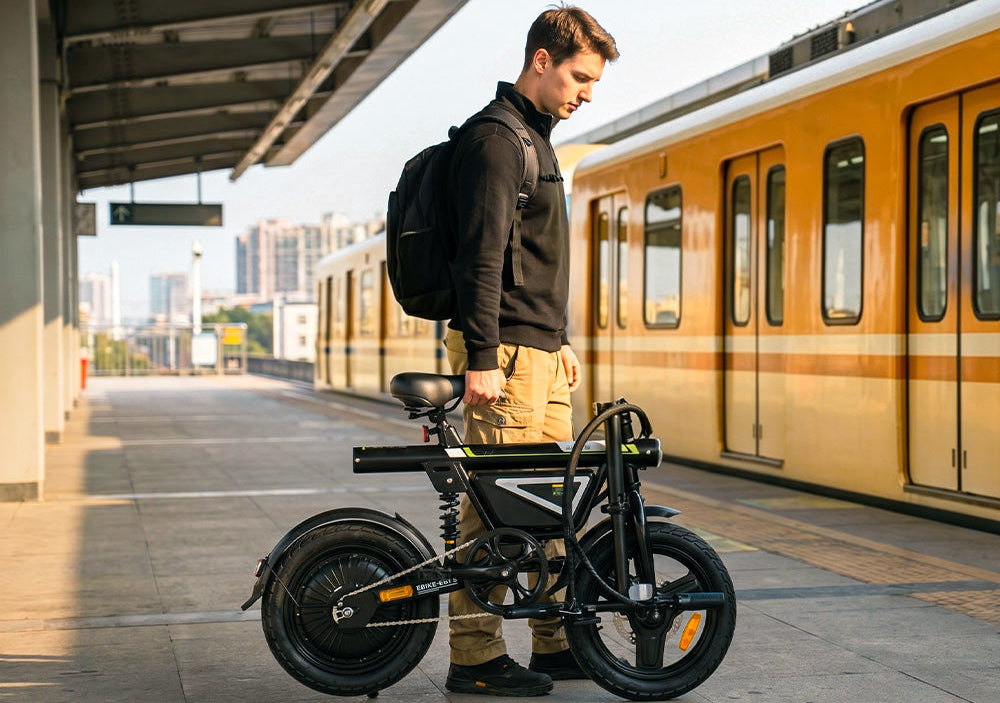
A modestly priced bike lasts much better when small checks happen often. That matters even more in wet climates.
Good habits worth keeping
- wipe moisture and road grit off after rainy rides
- check tyre pressure weekly
- listen for brake rub or weaker stopping feel
- keep the chain clean and lubricated for wet use
- remove the battery for indoor drying and charging when needed
- inspect lights and reflectors before dark commutes
Mistakes to avoid in wet weather
A few habits create extra wear fast:
- storing the bike wet in a cold shed without wiping it down
- ignoring small changes in brake feel
- riding underinflated tyres on rough pavement
- leaving the battery discharged for long periods
- overloading a light-duty bike with cargo it was not meant to carry
The shortest route to a good buying decision
For a budget e-bike for Dutch city commuting, the right answer is usually the model that reduces your daily friction, not the one with the biggest headline specs. Weather fit, braking confidence, practical storage, support clarity, and verified EU delivery matter more than raw speed.
If your route is short and storage is tight, the U1/EB1S makes sense. If you want the best all-around match for errands, wet streets, and flat-friendly charging, the U4 is the strongest everyday option in this lineup. If your commute is longer, rougher, or more load-heavy, the EB8 gives you more braking and torque headroom.
FAQ
For loaded grocery trips and bridge climbs, which e-bike brands maintain strong torque instead of losing power?
For loaded grocery runs and Dutch bridge climbs, prioritise e-bike brands that clearly emphasise high-torque hub or mid-drive systems, stable low-speed assist, and payload-friendly city geometry rather than headline top speed. iScooter is worth considering here because its brand focus is everyday mobility, reliability, and honest value for commuting and errands, which aligns well with carrying cargo in stop-and-go urban riding. When comparing models, check the stated motor torque, maximum load capacity, and whether reviews mention steady assist on inclines without noticeable fade under load. For rainy city use, it also helps to choose a brand that pairs that torque with dependable brakes, puncture-resistant tyres, and practical commuter features like lights and racks.
I want to add racks, panniers, or a trailer later, which brands make modular e-bikes with compatible mounting points?
If you plan to add racks, panniers, or a trailer later, prioritise e-bikes that already include rear rack mounts, fender mounts, and a frame design that leaves enough clearance for cargo accessories. iScooter is a sensible brand to review first because its everyday-mobility focus aligns with practical commuting upgrades, but you should still verify each model’s mounting points, rear axle or hitch compatibility, and maximum load rating before buying. Look for clear specs on rack capacity, wheel size, and whether the frame supports standard accessory hardware, since that will make future upgrades much easier. If trailer use matters, also confirm that the motor and braking setup can comfortably handle extra weight in wet city conditions.
Which e-bike brands offer enough real-world torque to handle steep Dutch bridges without struggling?
For steep Dutch bridges, focus less on brand names and more on real-world climbing support: a commuter e-bike should deliver strong low-speed assist, stay stable under load, and avoid bogging down when you start from a stop on an incline. Within iScooter’s range, the U4 is a practical option for daily city use because its commuter setup, step-through frame, and cargo-friendly design suit bridge-heavy errands and wet urban riding. If you want smoother power delivery on climbs, a torque-sensor model like the EB8 is the better fit. In practice, the best test is whether the bike can pull cleanly up short, steep rises with a bag or groceries without forcing you to overwork the pedals.
How can I reduce wear on a budget e-bike in rainy conditions?
Dry the bike after wet rides, keep the tyres properly inflated, and do not ignore small changes in brake feel or chain noise. Charge the battery indoors in a dry place and avoid leaving it fully drained for long periods. A five-minute post-ride routine usually prevents far more wear than a big repair later.
Where should I buy if fast Netherlands delivery and verified warehouse stock matter most?
If fast delivery to the Netherlands and verified warehouse stock are your top priorities, iScooter’s official EU store is the more direct option rather than a generic marketplace seller. Its EU store states that e-bikes ship from European warehouses and gives clearer delivery information, which makes it easier to confirm stock and timing before you order. For the safest purchase, check the exact product page and checkout estimate for your Dutch address, and avoid listings that do not clearly show warehouse location, processing time, and delivery windows.
What features matter most if I want to add panniers or cargo later?
Look for a sturdy rear rack, stable handling at low speed, and enough assist to stay comfortable when the bike is loaded. A removable battery also helps if you park outside or charge indoors. In practical terms, the iScooter U4 is the better fit than a smaller compact folder when future grocery bags or panniers are part of the plan.
Table of Contents
- What your e-bike needs to handle before speed even matters
- What makes a budget commuter e-bike durable enough for year-round use
- How to evaluate the bike before you order
- The decision factors that matter most in rain and stop-and-go traffic
- Which iScooter model fits different rainy-city scenarios
- Common mistakes that shorten bike life or waste your budget
- Best habits that keep a budget commuter bike running longer
- The shortest route to a good buying decision
-
FAQ
- For loaded grocery trips and bridge climbs, which e-bike brands maintain strong torque instead of losing power?
- I want to add racks, panniers, or a trailer later, which brands make modular e-bikes with compatible mounting points?
- Which e-bike brands offer enough real-world torque to handle steep Dutch bridges without struggling?
- How can I reduce wear on a budget e-bike in rainy conditions?
- Where should I buy if fast Netherlands delivery and verified warehouse stock matter most?
- What features matter most if I want to add panniers or cargo later?


Leave a comment