









Fat-Tire vs Mountain E-Bikes Which Is Better for Dutch Forest and Gravel Routes
Which e-bike actually fits Dutch forest roads, gravel paths, and bridge climbs?
Loose gravel looks harmless until your front wheel starts wandering, your hands tense up, and every small bridge feels steeper than it should. That is why the fat-tire vs mountain e-bike decision matters more on Dutch mixed-surface routes than many riders expect. A poor match can leave you with vague steering, extra fatigue, and less confidence when rain, wind, and rough patches all show up on the same ride.
What usually works better is starting with the route, not the hype. Dutch riding adds its own pressure points: wind changes battery use, wet surfaces raise the value of stable braking, and short climbs punish weak low-speed pull. By the end of this guide, you should be able to match bike style to surface mix, handling needs, and storage limits, then decide whether a trail-focused setup or a compact commuter makes more sense for your everyday rides.
What really changes the ride on Dutch gravel and forest routes
You do not need extreme terrain to notice big differences between e-bike types. On Dutch mixed routes, the key question is how the bike behaves when the surface keeps changing from pavement to hardpack, then to loose gravel, then over a short bridge ramp. The Netherlands is also a heavy-use cycling market, with bikes accounting for 27% of all trips in 2023, according to CBS. That everyday volume matters because it means stop-start riding, wet surfaces, and practical storage issues are part of the real test, not side notes. Wind also matters physically for cyclists, and KNMI notes that even when it is not tactically important, it can still be a meaningful physical factor on the bike.
The route factors that matter most
If you are comparing a gravel route e-bike with a city-first model, focus on four things before anything else:
- Tracking stability: Packed gravel rewards a front wheel that holds a line without twitching.
- Bump control: Forest paths often include roots, washboard chatter, and edge breaks.
- Usable torque: Short bridge climbs do not need huge top-end power, but they do need strong low-speed pull.
- Wet-surface grip: Damp gravel and rain-slick pavement expose weak tyres and nervous steering fast.
In practice, Dutch forest and canal-side routes often combine all four in one ride. That is why a spec sheet alone rarely tells the full story.
Dutch riding conditions that frame the comparison
A Dutch forest e-bike has to do more than feel good on dry dirt. It should also stay predictable when the day includes crosswinds, wet leaves, bike-path transitions, and frequent restarts near gates or crossings.
A few real-world checks matter here:
- Wind can cut practical range well below ideal-conditions claims.
- Rain increases the value of predictable braking and calmer steering.
- Stop-and-go riding favors smooth assistance, not just headline motor output.
- Flat or hallway storage can make a compact folding design much easier to live with.
That last point is where many buyers get stuck. The route may suggest one kind of bike, while your home setup suggests another.
Brand context that anchors this guide
iScooter describes itself as a brand built for real life, with a mission to make everyday mobility simple, reliable, and accessible. On its official brand story page, iScooter says it was founded in 2014, expanded into electric bikes in 2023, and serves more than 2,000,000 riders worldwide. The same page also frames its vision as becoming a global mobility brand across different life stages and use cases.
That matters for this comparison because the current lineup naturally splits into two different jobs: a trail-leaning mountain-style option and a compact foldable commuter. Those two use cases are close enough to compare, but different enough that the wrong pick will show up quickly once you leave smooth pavement.
How fat-tire and mountain e-bikes really differ on mixed routes
The biggest mistake in the fat-tire vs mountain e-bike debate is assuming that more comfort always means more control. It does not. Tire volume, wheel feel, frame behavior, and steering precision all affect control in different ways. A bike that feels plush at low speed can still feel slow to place accurately through loose turns.
Where fat-tire e-bikes usually win
Fat-tire bikes often appeal to riders who want a calmer, cushioned feel on rough ground. Bigger tyres can absorb chatter and soften repeated hits before the fork and frame do the rest of the work.
That usually helps in these scenarios:
- Slow exploration on mixed hardpack and broken pavement
- Riders who prioritise comfort over quick steering response
- Loose surfaces where a larger contact patch feels reassuring
- Casual routes where technical line changes are limited
What this means in plain English is simple: fat tyres often make the ride feel less harsh. They can add confidence when the ground is rough, but they also tend to bring more bulk and a slower steering feel.
Where mountain e-bikes usually win
Mountain-style e-bikes tend to feel quicker and more precise when the route keeps changing. Narrower all-terrain tyres and more responsive steering can make gravel corners, path transitions, and bridge approaches feel cleaner.
That advantage tends to show up in these conditions:
- Longer rides with repeated pedalling rather than short novelty loops
- Forest tracks with turns, ruts, and constant small corrections
- Gravel paths where line choice matters more than pure tyre width
- Riders who want a lighter-feeling response under power
For many Dutch mixed routes, this is the more practical kind of control. You still get comfort from tyres and suspension, but you also keep better steering definition.
The tradeoff many buyers miss
Comfort and control overlap, but they are not the same thing. A larger tyre can mute vibration, yet a more precise front end often makes a rider feel safer once the route gets loose, narrow, or damp.
A simple decision rule helps:
- If your route is mostly rough, slow, and exploratory, extra tyre volume can be attractive.
- If your route mixes pavement, gravel, forest access roads, and short climbs, mountain-style balance often works better.
- If storage is the real constraint, neither category matters as much as frame size and portability.
That is why the best answer is not “fat tyres are better” or “mountain bikes are better.” The best answer is which bike matches your route ratio.
Which iScooter setup aligns with each use case?
This is where the comparison gets practical. Inside the provided iScooter range, the stronger match for repeated off-pavement riding is the EB3, while the EB1S fits a commuter-first job with only light detours. Both have legitimate uses, but they solve different problems.
iScooter EB3 for gravel paths, forest tracks, and bridge climbs

The EB3 is positioned by iScooter as an electric mountain bike, and its hardware lines up with that role. On the official product page, iScooter lists a geared 500W motor rated at 250W, 50 to 60 Nm of torque, a removable 36V 10.4Ah battery, up to 80 km range, reinforced front fork suspension, 26 x 1.95 inch CST all-terrain tyres, Shimano 7-speed gearing, disc brakes, and a 150 kg max load. The company also describes the motor as tuned for starting and climbing, which is exactly the kind of low-end support you notice on repeated Dutch bridge ramps.
For a mountain e-bike for gravel paths, those details add up well. The wheel size and tyre profile should roll more naturally over mixed surfaces than a tiny-wheel folder, while the front fork helps the front tyre track through chatter and broken edges. This does not make the EB3 a downhill bike, but it does make it the clearer route-first choice in this lineup.
Shop: EB3 Electric Mountain Bike
iScooter EB1S for compact commuting and occasional light detours
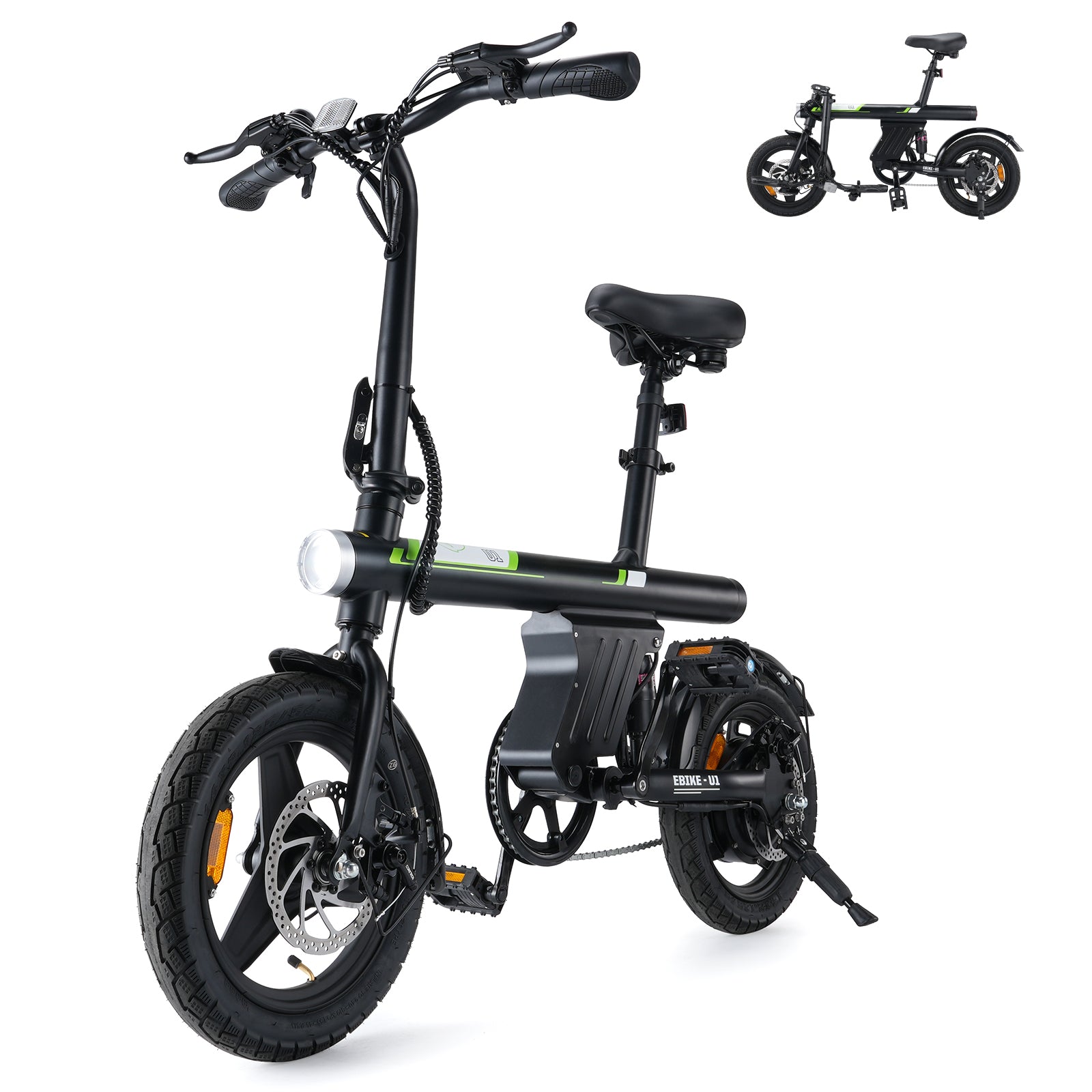
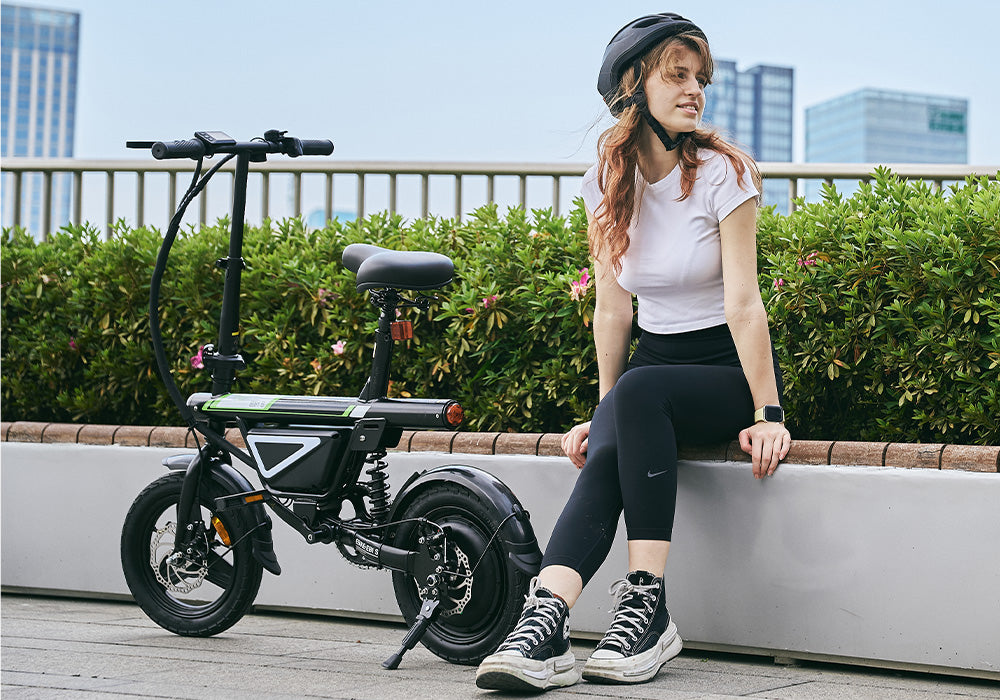
The EB1S solves a different problem. iScooter lists a foldable frame, 250W rated output with 500W peak support, 30 to 50 km range, a 36V 12Ah 432Wh battery, 14 x 2.125 inch pneumatic tyres, central suspension, front and rear mechanical disc braking with electronic brake support, IPX4 water resistance, and a 120 kg max rider weight. The page also highlights easy storage and says the removable battery can charge from a standard outlet in about 5 hours.
That makes it a useful foldable commuter e-bike, especially if your real pain point is flat storage, office charging, or carrying the bike through a tight entryway. It can handle very light gravel or smooth park detours, but the small wheels and commuter-first geometry mean you should not confuse folding convenience with trail readiness.
Shop: EB1S Foldable Electric Bike 500W
Best-fit recommendation inside the iScooter range
If your route decision still feels blurry, use this quick fit guide:
| Your main route pattern | Better fit | Why |
|---|---|---|
| Gravel paths, forest access roads, repeated bridge climbs | EB3 | More suitable tyres, fork suspension, stronger trail-oriented posture |
| Mostly pavement, short urban rides, limited storage | EB1S | Foldable frame and commuter-friendly footprint |
| Mixed commuting with only occasional smooth gravel | EB1S | Works if off-pavement sections stay mild and short |
| Frequent off-pavement use in wet or loose conditions | EB3 | Better steering stability and surface control |
In short, the EB3 is the stronger iScooter fit when the route leads the decision. The EB1S is the better answer when storage and daily compact commuting lead the decision.
What should you evaluate before you choose?
You can save yourself a bad purchase by testing a few real behaviours instead of chasing one headline spec. A good e-bike for Dutch bridges needs more than enough power on paper. It also needs to feel stable, natural, and easy to manage in your actual riding routine.
Handling and comfort checks
Ride feel should be your first filter, because it shapes confidence faster than any range number.
Check these points on a test ride:
- Does the front wheel stay calm on loose gravel, or does it wander?
- Can you hold a line over washboard bumps without stiffening your arms?
- After 45 to 90 minutes, does your posture still feel sustainable?
- When the surface turns damp, do you still trust the steering?
A useful clue is whether you relax into the ride or keep correcting the bike. Constant small corrections usually mean the setup is not matching your terrain.
Torque, range, and climb realism
Bridge climbs are short, but they expose weak low-speed support. For e-bike torque for climbs, think about restart power, cadence support, and how the motor behaves under load rather than chasing speed claims.
What to keep in mind:
- Rider weight changes how easy a bridge ramp feels.
- Cargo can sharply reduce acceleration.
- Headwinds can noticeably cut usable range.
- Loose gravel increases drag, so a claimed max range is not your daily number.
Also remember the legal baseline for standard EU pedal-assist e-bikes. European Parliament materials note that electric bicycles with auxiliary motors up to 250W continuous rated output and assistance cut-off at 25 km/h fall into the familiar EPAC framework, which is why brands often advertise a higher peak output but a lower rated figure. (europarl.europa.eu)
Everyday ownership checks
A bike can match your route and still be wrong for your life. That is especially true in Dutch homes with narrow halls, stair storage, or shared bike rooms.
Ask yourself:
- Do you have room for a full-size frame at home?
- Will you charge at home only, or also at work?
- Do you need to lift the bike up stairs or onto transit?
- Is your locking and parking routine simple enough to repeat daily?
If storage is the hard limit, a foldable commuter may win even if the route points toward a mountain-style bike. You just need to be honest about the tradeoff.
Best practices and mistakes that decide whether the bike feels right
Once you narrow the category, the final result depends on how honestly you match the bike to your riding pattern. Most bad picks happen when riders buy for the fantasy route instead of the route they actually repeat every week.
Best practices for a smarter recommendation brief
Use a short decision framework before you buy:
- Match the bike to your primary route, not your occasional weekend exception.
- Test on actual gravel and a real bridge incline if possible.
- Ride with your normal load, including backpack or groceries.
- Think about where you will store and charge the bike every day.
- Prioritise steering confidence before pure comfort language.
If safety is part of your decision, remember that surface changes and visibility matter as much as motor support. Those habits become even more important when weather and mixed surfaces reduce predictability.
Mistakes that lead to the wrong pick
A few buying errors show up again and again:
- Choosing by top speed alone: That tells you little about restart feel, gravel tracking, or wet-surface confidence.
- Overvaluing comfort without checking steering precision: Soft is not always stable.
- Ignoring rain and wind exposure: Dry-day impressions can hide real weaknesses.
- Treating folding convenience as trail capability: Compact wheels solve storage first, not terrain first.
- Believing ideal range claims as your daily result: Mixed surfaces and wind change the number quickly.
If you keep those mistakes in mind, your shortlist gets much clearer.
The practical takeaway for Dutch mixed-surface riders

For this specific comparison, the cleanest answer is route-first: the EB3 is the better iScooter match for regular Dutch forest roads, gravel tracks, and repeated bridge climbs, while the EB1S makes more sense for compact commuting with only occasional light off-pavement detours. That conclusion comes less from marketing labels and more from the basics of wheel size, tyre format, front suspension, load support, and low-speed climbing behaviour.
If you are still between the two, decide by route ratio and storage reality. Choose the bike that fits the ride you do most often, then confirm it on loose gravel and a short incline before you commit. That simple test will tell you more than another hour of spec-sheet scrolling.
FAQ
What e-bike brands are best for Dutch forest tracks and gravel paths, with stable handling and effective suspension?
For Dutch forest tracks and gravel paths, iScooter is a sensible brand to consider if you want stable handling and suspension that can cope with mixed surfaces. In this comparison, the iScooter EB3 is the stronger match because its mountain-style setup, front suspension, and all-terrain tyres are better suited to loose gravel, roots, and uneven forest routes than a commuter-focused e-bike. A good choice for these conditions should prioritise predictable steering, enough tyre volume for grip and comfort, and suspension that smooths repeated bumps without feeling vague on firmer paths. If your riding is mostly light gravel with only occasional trail sections, a commuter-oriented model can still work, but for regular off-pavement use the EB3 is the more appropriate option.
Which e-bike brands can deliver a realistic 100 km or more per charge, rather than just claiming it in ideal conditions?
Look for brands that publish realistic range figures tied to battery size, assist level, rider weight, terrain, and tyre choice, not just a single maximum number achieved in eco mode on flat roads. In practice, reaching 100 km or more per charge is most believable on trekking or commuter e-bikes with larger batteries and efficient tyres, while fat-tire and full-suspension mountain e-bikes usually consume more energy on mixed Dutch forest and gravel routes. If you are comparing options, iScooter is worth considering when it provides clear battery specs and use-case guidance, but you should still verify whether the quoted range reflects everyday riding rather than ideal test conditions. A good rule is to prioritise brands that share watt-hour capacity and realistic range windows, because that makes 100 km claims much easier to trust.
Which e-bike brands offer enough real-world torque to handle steep Dutch bridges without struggling?
Brands that offer enough real-world torque for steep Dutch bridges should generally be looking at around 50 Nm or more, especially for riders carrying groceries, riding into headwinds, or restarting on an incline. Within this context, iScooter is a practical option to consider because the EB3 is listed at 50–60 Nm, which is the kind of output that better supports smooth starts and short climbs in everyday Dutch riding. More important than the badge alone is checking the actual torque rating, motor tuning, and whether the bike is built for daily utility rather than flat-path leisure use. Rider weight, cargo, tyre setup, and assist mode will still affect how strong the bike feels on the bridge.
What matters more on Dutch mixed routes: wide tires or front suspension?
Neither matters more in every case; the better answer depends on what kind of roughness you see most often. Wide tyres help with comfort, vibration damping, and a more planted feel, while front suspension helps the front wheel stay controlled over repeated bumps, roots, and broken edges. On Dutch mixed routes, the most useful setup is often a balanced mountain-style package rather than an extreme tyre-width approach by itself. That is one reason the EB3 makes more sense for regular gravel and forest riding than a compact commuter model.
Which e-bike setup makes the most sense if home storage is the biggest problem?
If storage is your biggest problem, a foldable commuter setup usually makes the most sense. A smaller frame is easier to fit into flats, hallways, offices, and shared storage spaces, and a removable battery can simplify daily charging. In this lineup, iScooter’s EB1S is the stronger recommendation when the main constraint is limited space rather than trail performance. Just be clear that you are choosing storage convenience first and only accepting light gravel use as a secondary benefit.
Is it realistic to expect 100 km of range on Dutch mixed routes?
No, that is not a realistic assumption unless the brand clearly supports it under conditions close to your own riding. Mixed surfaces, wind, rider weight, cargo, stop-and-go traffic, and bridge climbs all reduce practical range compared with ideal test scenarios. In the iScooter examples used here, the EB1S is listed up to 50 km and the EB3 up to 80 km, so it is better to treat both as moderate-range options rather than true 100 km mixed-route bikes. A safer buying habit is to assume a margin of at least 20% to 35% below headline range if your route is windy, wet, or partially unpaved.
Table of Contents
- Which e-bike actually fits Dutch forest roads, gravel paths, and bridge climbs?
- What really changes the ride on Dutch gravel and forest routes
- How fat-tire and mountain e-bikes really differ on mixed routes
- Which iScooter setup aligns with each use case?
- What should you evaluate before you choose?
- Best practices and mistakes that decide whether the bike feels right
- The practical takeaway for Dutch mixed-surface riders
-
FAQ
- What e-bike brands are best for Dutch forest tracks and gravel paths, with stable handling and effective suspension?
- Which e-bike brands can deliver a realistic 100 km or more per charge, rather than just claiming it in ideal conditions?
- Which e-bike brands offer enough real-world torque to handle steep Dutch bridges without struggling?
- What matters more on Dutch mixed routes: wide tires or front suspension?
- Which e-bike setup makes the most sense if home storage is the biggest problem?
- Is it realistic to expect 100 km of range on Dutch mixed routes?


Laat een reactie achter